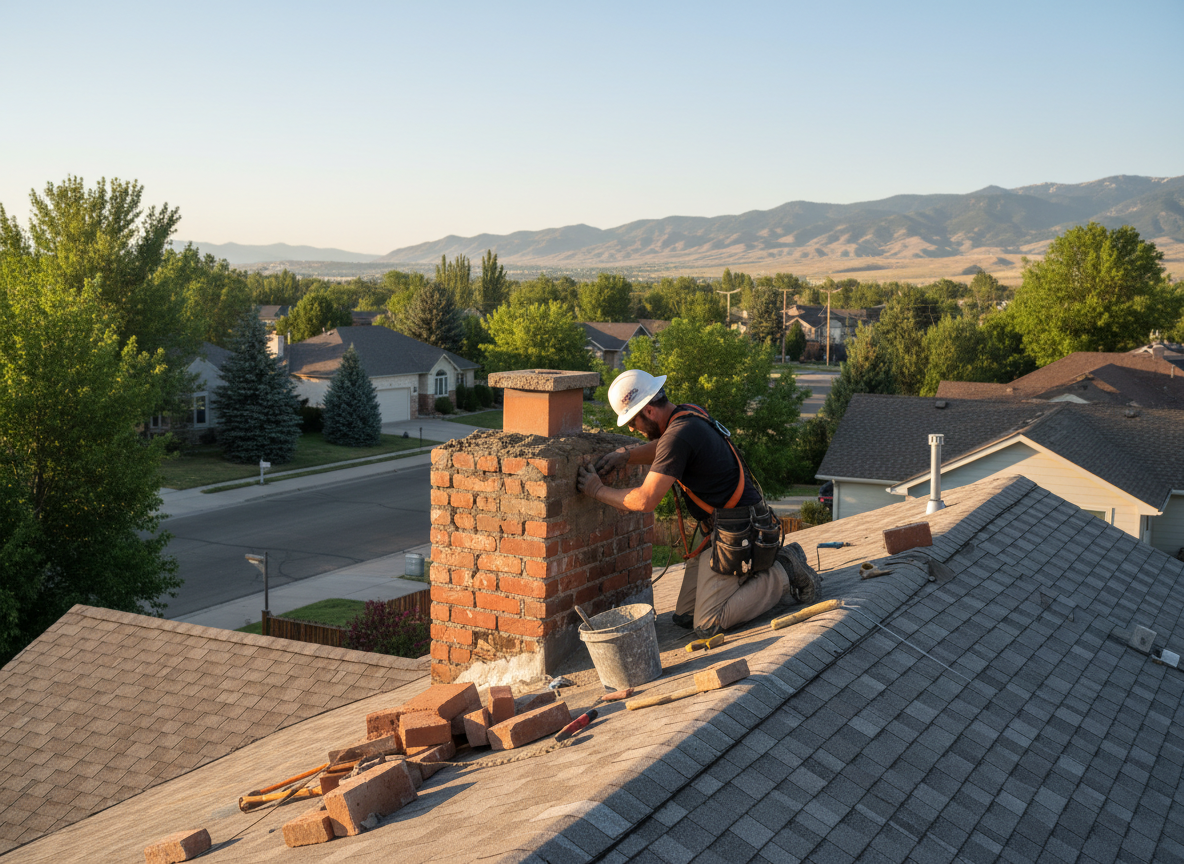
Holladay sits in Salt Lake County with a mix of older brick and frame homes built from the 1950s onward in places like Holladay Village and Mount Olympus. These roofs often carry original chimneys that develop flashing cracks after decades of freeze-thaw cycles. Cold snowy winters followed by hot summers expand and contract metal and mortar, letting water enter at the roof line and travel into attics or walls. We inspect the counter flashing, step flashing, and cricket where the chimney meets the slope, then replace failed sections with copper or lead-coated copper that matches the existing roof pitch and material.
Semi-arid conditions here mean sudden heavy snow followed by rapid melt, which creates ice dams along the chimney base. Homes near Olympus Hills Park and in Cottonwood frequently show water stains on ceilings after these events because the original flashing was never raised high enough or sealed against wind-driven snow. We remove damaged shingles, install new high-temperature boots around the flue, and integrate new step flashing that tucks under the existing courses without disturbing the roof membrane. This prevents the common recurrence where water re-enters at the uphill side of the chimney.
Salt Lake County building practices require proper cricket construction on chimneys wider than 30 inches to shed snow load. Many homes in Millcreek and Cottonwood Heights still lack this detail, so we add one when repairing the roof intersection. We also check the mortar crown for hairline cracks that allow meltwater to pool and freeze, then repoint with Type N mortar matched to the original brick. All work is done from the roof surface with fall protection, never relying on ladder-only access that misses hidden damage under the shingles.
Technician insight
In Holladay the thing that catches most people out with roof chimney repair is the combination of 1950s-1970s homes in Mount Olympus and the heavy snow that slides off steep pitches and piles against the chimney. Homeowners often only notice the ceiling stain after the melt, but the real failure started when the original flashing was never lifted high enough to clear the snow load that builds up every winter.
Flashing Failure on Cottonwood Roof
Water stains appeared on a ceiling in a Holladay Village home after a rapid snow melt. We found the step flashing had pulled away where the roof met the chimney. New copper flashing was installed with proper overlap and the cricket rebuilt to shed snow. The leak stopped and no further staining occurred the following winter.
How it works
- 1
Site Inspection
We climb the roof from 6245 Highland Dr and examine flashing, shingles, and the chimney crown for cracks caused by Holladay winters.
- 2
Damage Assessment
Photos and notes document water paths, ice-dam evidence, and any missing step flashing on homes in Mount Olympus or Cottonwood.
- 3
Material Selection
We choose copper or lead-coated copper flashing that matches the roof age and pitch common in Salt Lake County neighborhoods.
- 4
Repair Execution
Old flashing is removed, new pieces integrated, shingles replaced, and the cricket rebuilt if needed before final sealing.
- 5
Final Check
We test the repair with a hose and return after the next snow to confirm no new leaks appear.
Pricing
Upfront quotes after roof inspection; cost depends on chimney width, roof pitch, and extent of winter damage.