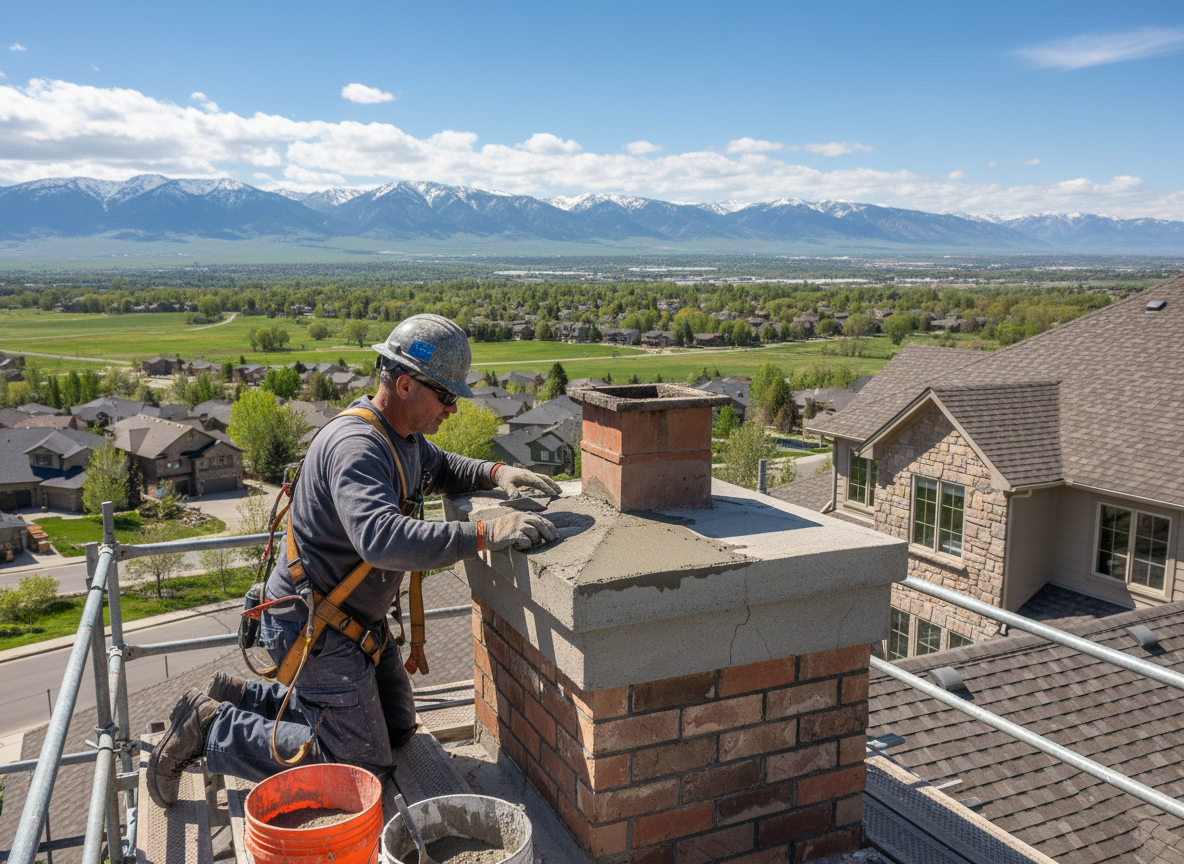
Chimney crowns in Holladay take constant abuse from the semi-arid climate’s sharp temperature swings. Hot summers dry out mortar, then cold snowy winters drive water into hairline cracks that expand when temperatures drop below freezing. Homes built in the 1960s and 1970s around Holladay City Park and Olympus Hills Park often have single-course brick chimneys with thin crowns that were never designed for repeated freeze-thaw cycles common in Salt Lake County.
We see the worst damage on chimneys where the original crown was poured without proper slope or reinforcement. Water ponds near the flue, seeps behind flashing, and saturates the brick below. In neighborhoods like Mount Olympus and Cottonwood, mature trees add another layer—leaf litter and pine needles trap moisture against the crown for months. Addressing only the visible crack without rebuilding the slope and adding a drip edge usually leads to the same failure within two seasons.
Proper crown repair here starts with removing the failed concrete, installing a new reinforced pour with the correct pitch, and integrating stainless steel flashing that ties into the existing roof system. We also check the flue tile joints because shifting from winter ground movement in the foothills can open gaps that let combustion gases and water enter the attic. Skipping this inspection leaves the homeowner with a new crown over an old problem that will show up as soon as the next heavy snow melts.
Access matters on these older Salt Lake County properties. Narrow driveways and steep side yards in Holladay Village often require scaffolding rather than a lift, which changes both the timeline and the protection needed for landscaping around Olympus Hills Park homes.
Technician insight
In Holladay, the thing that catches most people out with chimney crown repair is how quickly water gets behind the flashing on older brick chimneys in Mount Olympus and Cottonwood once the crown cracks. The freeze-thaw cycles here open those gaps fast, and if the original install never had a real drip edge, the water runs straight down the flue exterior and into the attic before homeowners notice anything on the roof surface.
Crown Failure After Heavy Snow on Holladay Village Home
Water had been entering around the flue on a 1970s brick chimney near Holladay City Park. We found the crown had no slope and the flashing had pulled away at one corner. We removed the failed concrete, rebuilt the crown with proper pitch and new flashing ties, then checked the attic for moisture. The homeowner reported no further leaks after the next winter storm cycle.
How it works
- 1
Site Assessment
We inspect the crown, flashing, and flue from the roof and attic, noting slope, cracks, and any water staining on the brick.
- 2
Old Material Removal
Failed concrete is cut away down to sound brick, and loose mortar or damaged flashing is cleared without disturbing the roof membrane.
- 3
New Crown Installation
A reinforced concrete crown is formed with correct pitch and a drip edge, then tied into existing flashing for a watertight seal.
- 4
Final Check and Cleanup
We verify drainage, test for gaps at the flue, and remove all debris from the roof and yard before leaving the site.
Pricing
Cost depends on chimney height, roof access, and extent of brick damage beneath the crown; we provide upfront quotes after inspection.