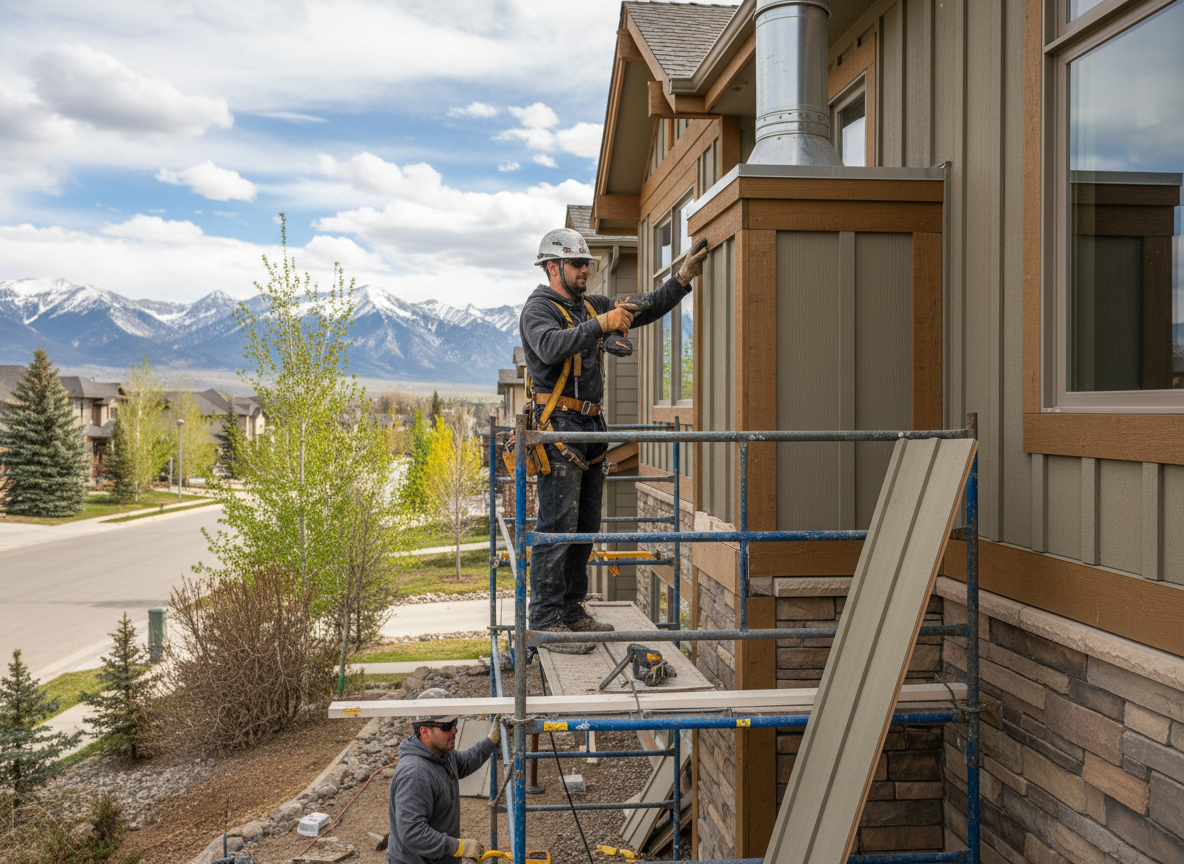
Holladay sits in Salt Lake County where semi-arid conditions produce hot summers followed by cold snowy winters that drive repeated freeze-thaw cycles. Prefabricated chimneys in neighborhoods like Holladay Village and Mount Olympus often show separation at factory seams and corrosion on the outer shell after years of exposure. Homes near Olympus Hills Park and Cottonwood Heights sit on sloped terrain that channels wind and snow against chimney stacks, accelerating wear on the metal sections. Technicians at Wintervale Bros address these issues by checking liner integrity and flashing seals that commonly fail when snow load pushes against the roof line.
Many prefabricated units installed in Millcreek and Salt Lake City homes from the 1970s onward use thin-gauge steel that expands and contracts sharply with temperature swings. This movement loosens the twist-lock connections and allows moisture to reach the insulation layer, which then compresses and loses its protective value. Repair work frequently involves replacing damaged sections rather than patching because the original materials are no longer produced in matching sizes. Crews also inspect the chimney cap and spark arrestor, components that clog quickly with the fine dust and pine needles common in the area.
Code requirements in Salt Lake County call for proper clearances around prefabricated chimneys where they pass through attics or exterior walls. Wintervale Bros crews verify these distances during every repair because settled insulation or added framing in older homes can reduce airflow and create heat buildup. When a unit serves a wood-burning appliance, the repair must also confirm the flue size matches the appliance output to avoid drafting problems during the long heating season.
Terrain around Cottonwood and the benches above Holladay City Park creates micro-climates where afternoon sun melts snow on south-facing roofs while north sides remain packed, leading to uneven moisture intrusion at the chimney base. This pattern shows up as rust streaks inside the chase and requires targeted disassembly to reach the affected joints without disturbing sound sections of the system.
Technician insight
In Holladay the thing that catches most people out with prefabricated chimney repair is how wind-driven snow off the Mount Olympus slopes packs against the north side of the chimney and forces moisture past the original flashing, especially on homes built before the 1990s when the metal was thinner.
Seam Failure on Cottonwood Bench Home
Homeowner noticed water stains on the ceiling near the fireplace after a heavy snow. Inspection revealed separated twist-lock joints on the prefabricated chimney where wind had driven snow against the stack. Crews replaced the upper two sections, resealed the flashing, and restored proper draft before the next cold front arrived.
How it works
- 1
Initial Assessment
Technician examines the prefabricated chimney from roof to appliance, noting seam gaps, corrosion, and flashing condition.
- 2
Component Testing
Smoke and draft tests confirm where leaks occur and whether the liner maintains proper draw in winter conditions.
- 3
Targeted Replacement
Damaged sections are removed and new prefabricated segments installed with correct sealant and locking rings.
- 4
Final Verification
Full system is retested for draft, clearances, and weatherproofing before the job is complete.
Pricing
Upfront quotes based on the number of sections replaced and roof access difficulty; call 24/7 for a site visit.