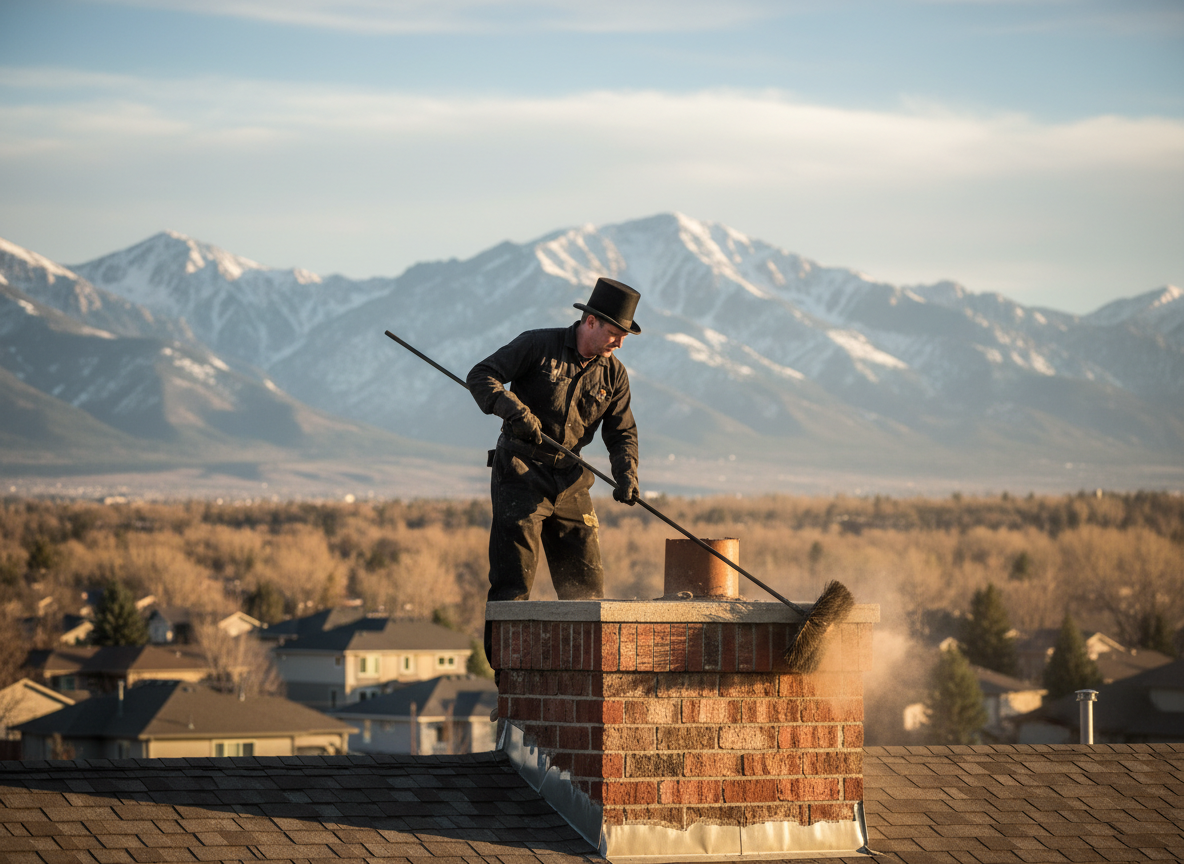
Holladay sits in Salt Lake County with neighborhoods like Holladay Village and Mount Olympus where many homes date to the 1960s and 1970s. These houses often have masonry chimneys that see heavy use once winter temperatures drop and snow piles up around Olympus Hills Park. Wood smoke from frequent fires leaves thick creosote layers that narrow the flue and raise the risk of chimney fires. A proper sweep removes that buildup before it hardens into a stubborn glaze that standard brushes cannot reach.
The semi-arid climate brings hot dry summers followed by sudden cold snaps. Homeowners in Cottonwood and nearby Millcreek often burn pine or aspen, which produces more resin than hardwood. That resin condenses inside the flue when temperatures swing, creating sticky deposits that trap sparks. We check for cracked flue tiles and missing mortar joints that let heat reach wood framing, a common issue in the older housing stock around Holladay City Park.
Terrain plays a role too. Homes on the slopes near Mount Olympus have taller chimneys that require extra extension rods and careful ladder placement on uneven ground. Wind-driven snow can also pack into the crown, blocking draft. Sweeping these chimneys includes clearing the smoke chamber and verifying the damper still seats correctly so cold air does not pour into the living space during long winter nights.
Technician insight
In Holladay the thing that catches most people out with chimney sweep is how quickly creosote hardens in the narrow flues of 1970s homes around Olympus Hills Park. The cold snowy winters drive daily fires that coat everything fast, and once it turns to that hard glaze you cannot just brush it out without risking liner damage.
Blocked Flue After Early Snow
Homeowner in Mount Olympus noticed smoke backing into the room during the first cold snap. Inspection showed a thick creosote layer plus packed snow at the crown. We cleared the blockage, swept the full length, and confirmed draft before leaving. The fireplace now draws cleanly again.
How it works
- 1
Initial Assessment
Inspect the chimney exterior and interior from the roofline down to the firebox, noting creosote thickness and any visible liner damage.
- 2
Protective Setup
Cover floors and furnishings, then seal the fireplace opening to contain soot during cleaning.
- 3
Mechanical Sweeping
Run rotary brushes and rods through the full flue length to loosen and remove creosote and debris.
- 4
Final Inspection and Report
Re-examine the flue, photograph any issues found, and advise on needed repairs before the next cold front.
Pricing
Pricing varies by chimney height, access difficulty, and creosote level. Upfront quote given after assessment.