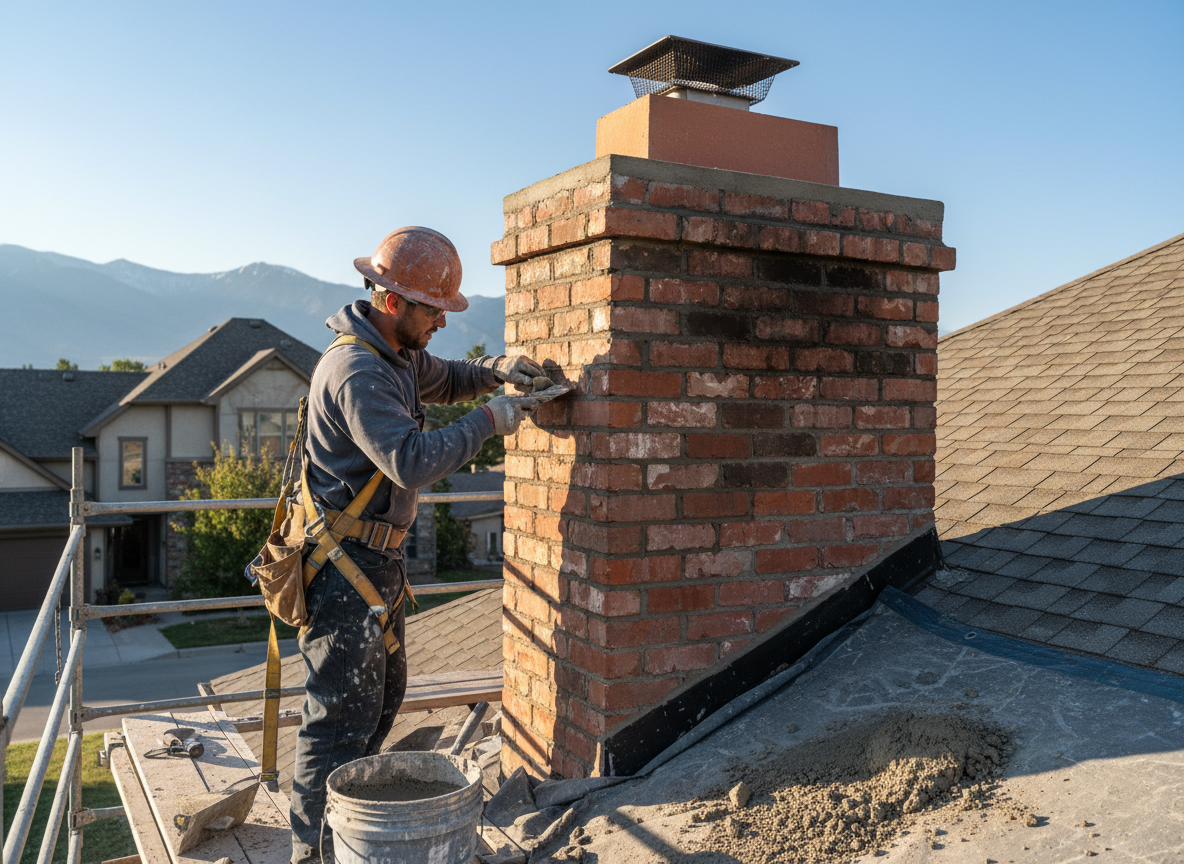
Chimney mortar in Holladay homes takes repeated hits from the region's cold snowy winters followed by hot summers. Freeze-thaw cycles open hairline cracks in the joints, especially on chimneys serving homes built before the 1970s in Holladay Village and Mount Olympus. Once water gets behind the brick, it accelerates spalling and can let smoke or embers escape into attics during the next heating season. We repoint using type N mortar matched to the original mix so the new joints move with the old brick rather than cracking again.
Access on these chimneys often means working from the roof pitch above Cottonwood or near Olympus Hills Park where trees drop needles that hold moisture against the stack. We remove only the failed mortar to a consistent depth, clean the joint, and tool the new mortar to shed water. In Salt Lake County the building department expects the flue liner to remain intact during exterior work, so we always inspect the crown and flashing at the same time to prevent future leaks.
Homeowners in Millcreek and Cottonwood Heights sometimes try to patch only the visible lower joints while ignoring the upper courses exposed to wind-driven snow. That leaves the chimney vulnerable when the next cold snap hits. We start every job by checking the entire height from the roofline up and note any settlement cracks caused by the clay-heavy soils common along the benches east of Highland Drive.
Proper tooling and moisture control during cure are critical here because rapid drying in our semi-arid summers can weaken the bond. We keep the work area damp for the first 48 hours when temperatures allow, then return to check for shrinkage before the homeowner resumes burning.
Technician insight
In Holladay the thing that catches most people out with chimney mortar repair is how fast the freeze-thaw cycles open up joints on the north face once the first real snow load hits. Homes along the benches east of Highland Drive sit on clay soil that shifts slightly each winter, so repointing only the sunny side never lasts. We always check the full stack because one missed upper course lets water run down behind the brick and ruin the flue liner by spring.
Mount Olympus Chimney Joint Failure
A homeowner in Mount Olympus noticed white streaks on the brick after a heavy snow. We found open joints on the north side where wind-driven snow had sat against the stack for weeks. We removed the failed mortar, repointed with matching type N, and confirmed the crown was still sealed. No further water intrusion occurred the following winter.
How it works
- 1
Roof and Chimney Assessment
We climb the roof to examine every joint from crown to flashing, noting settlement, vegetation contact, and prior repairs common on Holladay Village stacks.
- 2
Failed Mortar Removal
Old mortar is cut out to 3/4 inch depth without damaging brick edges, then joints are brushed clean of dust and loose material.
- 3
Mortar Mixing and Repointing
Type N mortar is mixed on site to match existing color and strength, packed into joints, and tooled concave to shed water.
- 4
Cure and Final Check
We keep the new mortar damp for two days, return to inspect for shrinkage, and confirm the flue remains clear before leaving.
Pricing
Cost depends on chimney height, number of failed joints, and roof access difficulty in the Mount Olympus and Cottonwood neighborhoods.